Slab Leak Water Damage in La Puente, CA
A pinhole in a copper line under a post-war slab can wet flooring and walls for weeks before anyone sees it. The restoration team maps the wet area, opens only what is needed and dries the slab.
(888) 578-6508Call about a La Puente slab leak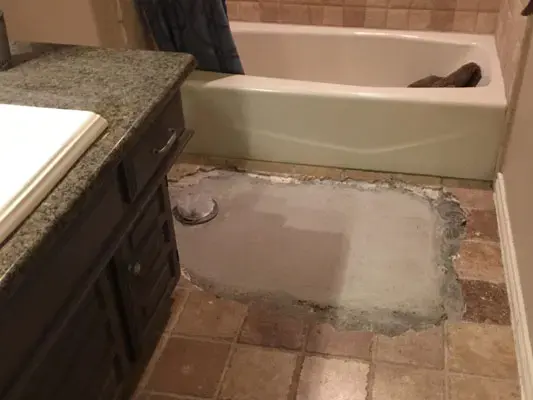
What to do first: slab leak water damage in La Puente
- 1
Shut the main
Turn off the water at the main so the leak stops feeding the slab.
- 2
Mark the signs
Note warm spots, lifted flooring and damp carpet for the tech to check.
- 3
Check the meter
With every fixture off, see whether the meter is still moving.
- 4
Leave flooring down
Photograph it but do not pull it up early; it can hide how far the water went.
Trade standards on this job
- Thermal imaging and pinless meters find water under flooring
- Concrete cannot dry through plank or tile
- Flooring lifted only inside the moisture map
- The slab is metered before new flooring goes down
What does slab leak water damage cost in La Puente, CA?
In La Puente, CA, slab leak water damage restoration typically runs $1,500 to $7,500, depending on how long the leak ran, how many rooms the water reached, the flooring type and how much drywall has to come out. The plumbing repair is priced separately.
One room, caught early
$1,500 to $3,000- Moisture mapping
- Partial flooring lift
- Slab and wall drying
Water under several rooms
$3,000 to $5,500- Flooring removed where wet
- Baseboard and drywall cuts
- Daily readings
Long-running leak
$5,500 to $7,500+- Wide flooring removal
- Extended slab drying
- Antimicrobial treatment
For a closer planning number, try the water damage cost calculator. A firm price comes from the restoration company after it sees the damage.
How slab leak damage is handled in La Puente
The order never changes: measure first, remove the water, dry, then prove it dry with readings.
(888) 578-6508Get La Puente drying started- 1
Map the moisture
The tech who does the walkthrough maps moisture with thermal imaging and pinless meters before any equipment goes down.
- 2
Pull the water
The extraction crew removes standing water with truck-mounted extraction, so it leaves the building instead of spreading.
- 3
Set the drying
The drying team sizes air movers and LGR dehumidifiers to each room's evaporation load and runs them around the clock.
- 4
Read, log, verify
The team logs readings daily until wet materials sit within 2 to 4 points of a dry reference, and the log goes into the claim file.
Many La Puente houses were built in the 1950s and 1960s on concrete slabs, with copper or galvanized water lines running through or under the concrete. Hard San Gabriel Valley water, pressure swings and decades of small ground movement wear on those lines. When one pinholes, the water has nowhere to go but up into the flooring and sideways under interior walls.
Signs a slab leak is already doing damage
- A warm spot on the floor when the hot side is leaking
- Vinyl plank or laminate that lifts, cups or feels soft
- Damp carpet or a musty smell with no visible source
- The water meter turning with every fixture off
- A water bill that climbs month after month
Mapping and opening only what is needed
A plumber locates and repairs the line, often by rerouting it through the attic or walls. The water damage side is separate work. The tech who does the walkthrough scans floors and wall bottoms with thermal imaging and pinless meters, then confirms with pin readings. That map shows whether the water stayed in one room or ran under a wall into the next. Flooring over the wet area usually has to come up, because concrete cannot dry through plank, laminate or tile set in thinset.
Concrete dries slowly. A slab that stayed wet for weeks can take longer to dry than the rooms above it, so the drying team meters it before new flooring goes down.
Drying the slab and the rooms above it
Once the leak is repaired, air movers go across the exposed slab and along the wall base, with LGR dehumidifiers pulling moisture out of the air. Daily readings go into the drying log until the slab and framing meet the goal. The EPA WaterSense leak page shows how to check a meter for a hidden leak, and the USGS water science pages explain the hard water that wears on copper over time.
Where the team handles slab leak water damage around La Puente
The restoration team covers all of La Puente, from Main Street and Amar Road to Hacienda Boulevard, plus Valinda, Bassett, Avocado Heights, Hacienda Heights, West Covina and the City of Industry.
ZIP codes 91744, 91746, 91747 and 91749.
See every area coveredSlab Leak Water Damage in La Puente: common questions
How do I know if I have a slab leak?
Watch for a warm spot on the floor, flooring that lifts, damp carpet with no source, a meter that moves with everything off, or a water bill that keeps rising.
Who fixes the pipe and who fixes the water damage?
A plumber finds and repairs the leaking line. The moisture mapping, flooring removal where needed and drying are handled by the restoration team.
Does all the flooring have to come up?
Only the flooring over wet areas. Moisture mapping shows the edge of the water, and flooring beyond that edge can usually stay.
How long does a slab take to dry?
A contained area often dries in three to five days after the repair, but a slab that stayed wet for weeks can take longer. The drying team decides with readings, not a calendar.
Are slab leaks common in La Puente?
Yes. Post-war slab homes with original copper or galvanized lines and hard water are the classic setup for slab leaks across the San Gabriel Valley.
Is slab leak damage covered?
Many policies treat sudden water damage differently from the pipe repair, and long, slow leaks may be excluded. Coverage depends on your policy, so it is worth checking with your own insurer.
Warm floor or a meter that never stops? Call now.
A slab leak keeps feeding water under the floor until the line is repaired and the rooms are dried. The restoration team maps and dries slab leaks across La Puente.